FIELD GUIDE · FOR INSTALLERS AND OLD HOUSES
Here's how to tie new boards in so the repair disappears, from the people who still make 1-1/2" strip.
We don't install. This is the order we'd want your installer to follow; they decide.
Start With a Tape Measure, Not a Store
You take out a wall, or a radiator leaves a hole, or water gets under a sink, and now an old floor needs new boards. The temptation is to pick up the closest oak at a supplier and make it work. Restoration carpenter Scott Sidler puts it plainly in Fine Homebuilding: wood looks different depending on where it grew, when it was cut and how it was milled, so a trip to the store for "the same species" won't get you a match on its own.
Getting close takes four measurements and an honest look at the old wood. Then it takes the right install and a full sand and finish. Here's the order we'd go in.
Measure the Face Width
Width is the measurement that gives a repair away first. Measure the exposed face of several boards, not just one, across the room. Older floors weren't always made to the widths sold today. Sidler has seen heart pine at 2-1/4", 2-3/8" and 2-1/2" in the same part of Florida. Small differences, but you'll see them on a finished floor.
For oak, the two widths you'll find most often in older houses are 2-1/4" and 1-1/2". Mills in the early 1900s cut both, and the narrow strip often came from boards too narrow to make 2-1/4". Today 2-1/4" is a common stock width. 1-1/2" mostly isn't.
| Measure | What to Write Down |
|---|---|
| Face width | To the 1/16", across at least five boards |
| Thickness | From a register opening or under removed base shoe |
| Tongue | Distance from the bottom of the board to the bottom of the tongue |
| Species | Red oak, white oak, or "not sure" plus a photo |
| Cut | Flatsawn (arches) or quartersawn (straight lines and flecks) |
| Grade | Clean and even, or knots and color |
| House | Year built |
Measure the Thickness and Find the Tongue
You can't see thickness from the top, so find an edge. A floor register is the easy one. Otherwise pull a short piece of base shoe. Sidler's rule of thumb is that thickness within about 1/8" can usually be sanded flush, and a board that's a little thick is better than one that's a little thin.
The tongue matters more than the overall thickness. On thicker old floors the tongue sometimes sits a little below center, so the floor can be sanded more times. What has to match is the distance from the bottom of the board to the tongue, because that's what lets new and old lock together at the same height.
Name the Species
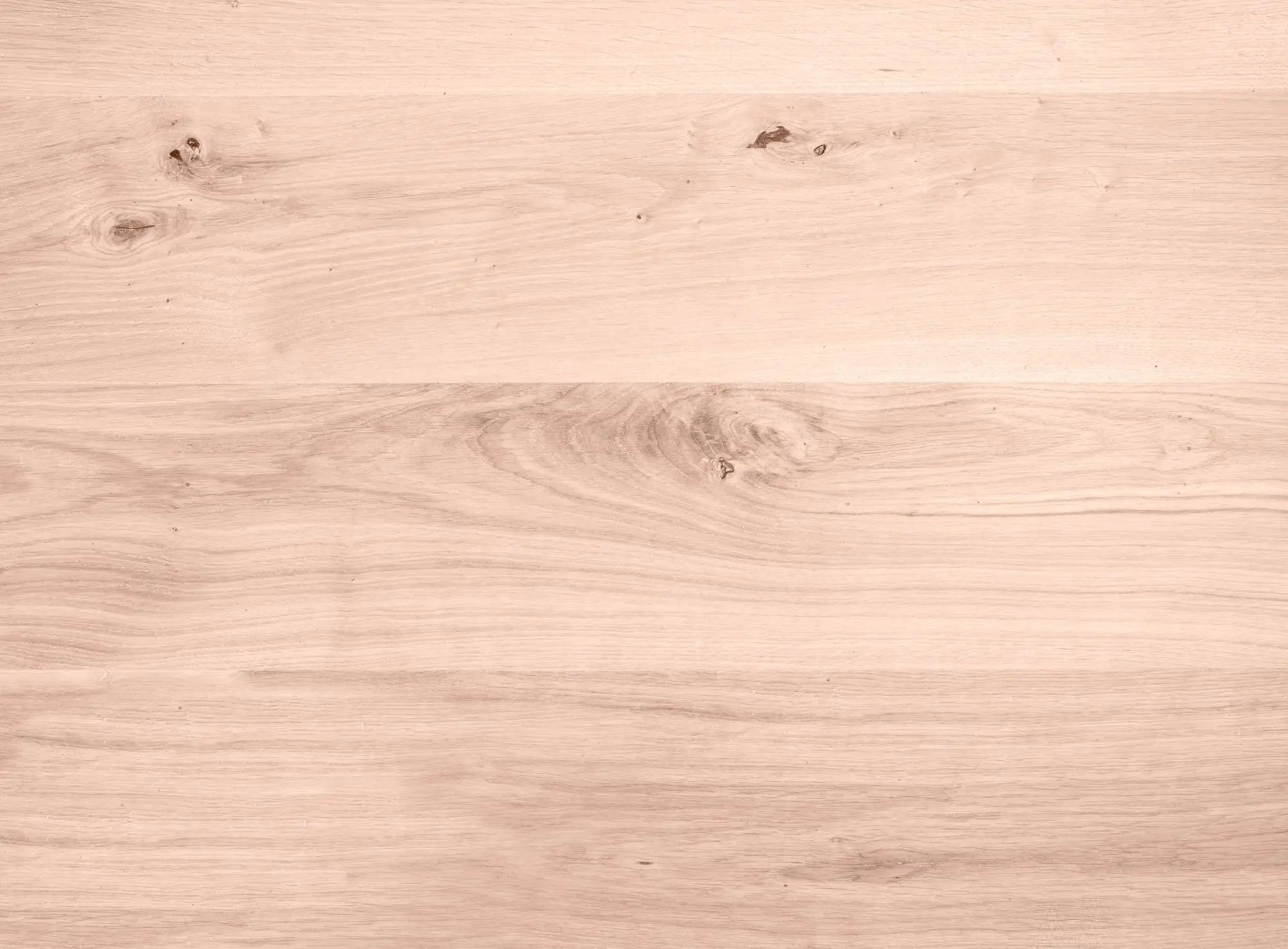
Red oak and white oak finish differently, and the difference doesn't sand out. Red oak runs warmer and pinker. White oak is browner and more even. When you're not sure, pull a loose piece and take it to your dealer.
Older houses aren't always oak, either. Sidler lists heart pine, red oak, white oak and sometimes Douglas fir in the old houses he works on. We make oak and hickory only, so if yours is pine or fir, you need a different source.
Read the Grain and the Grade
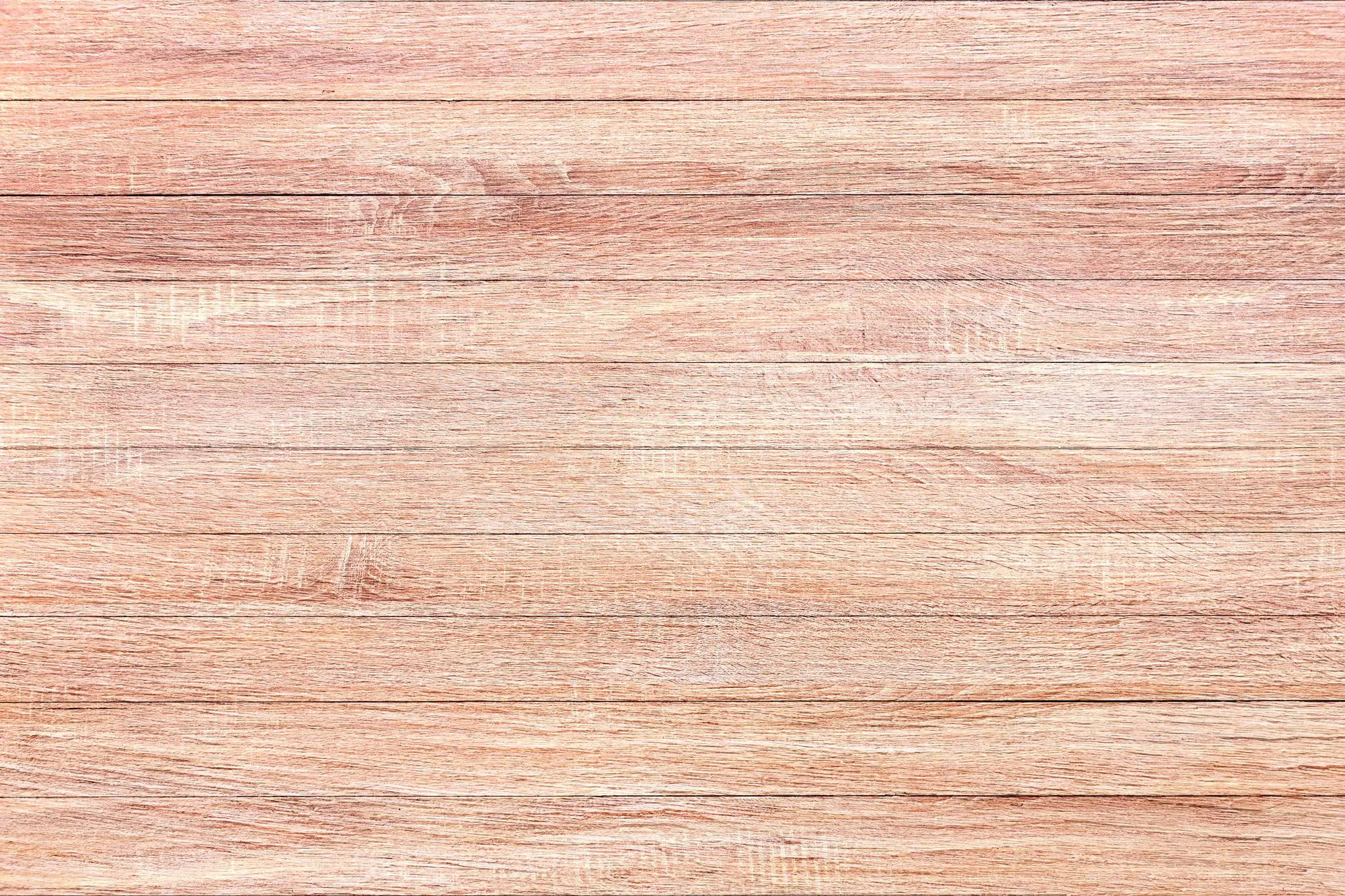
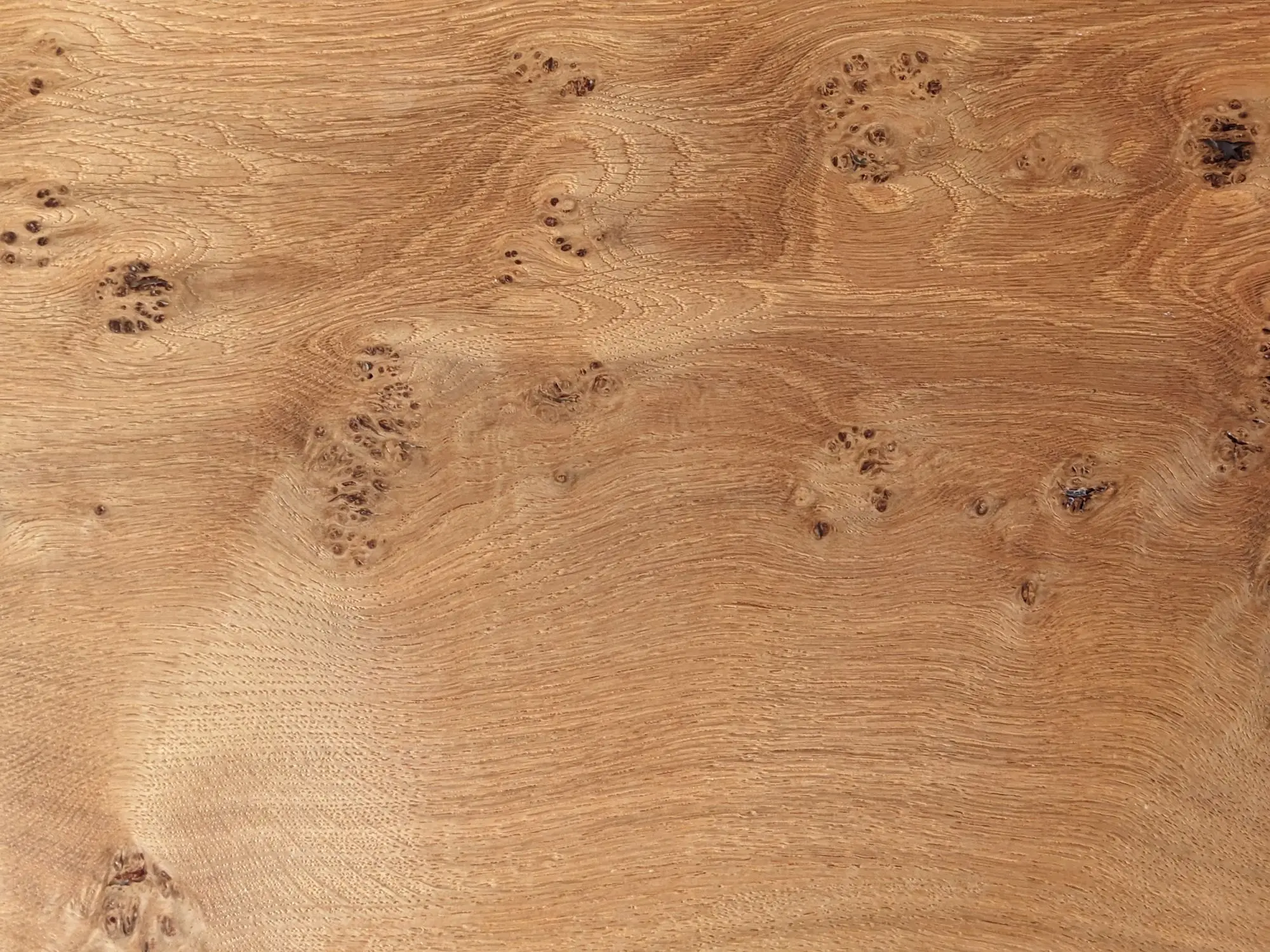
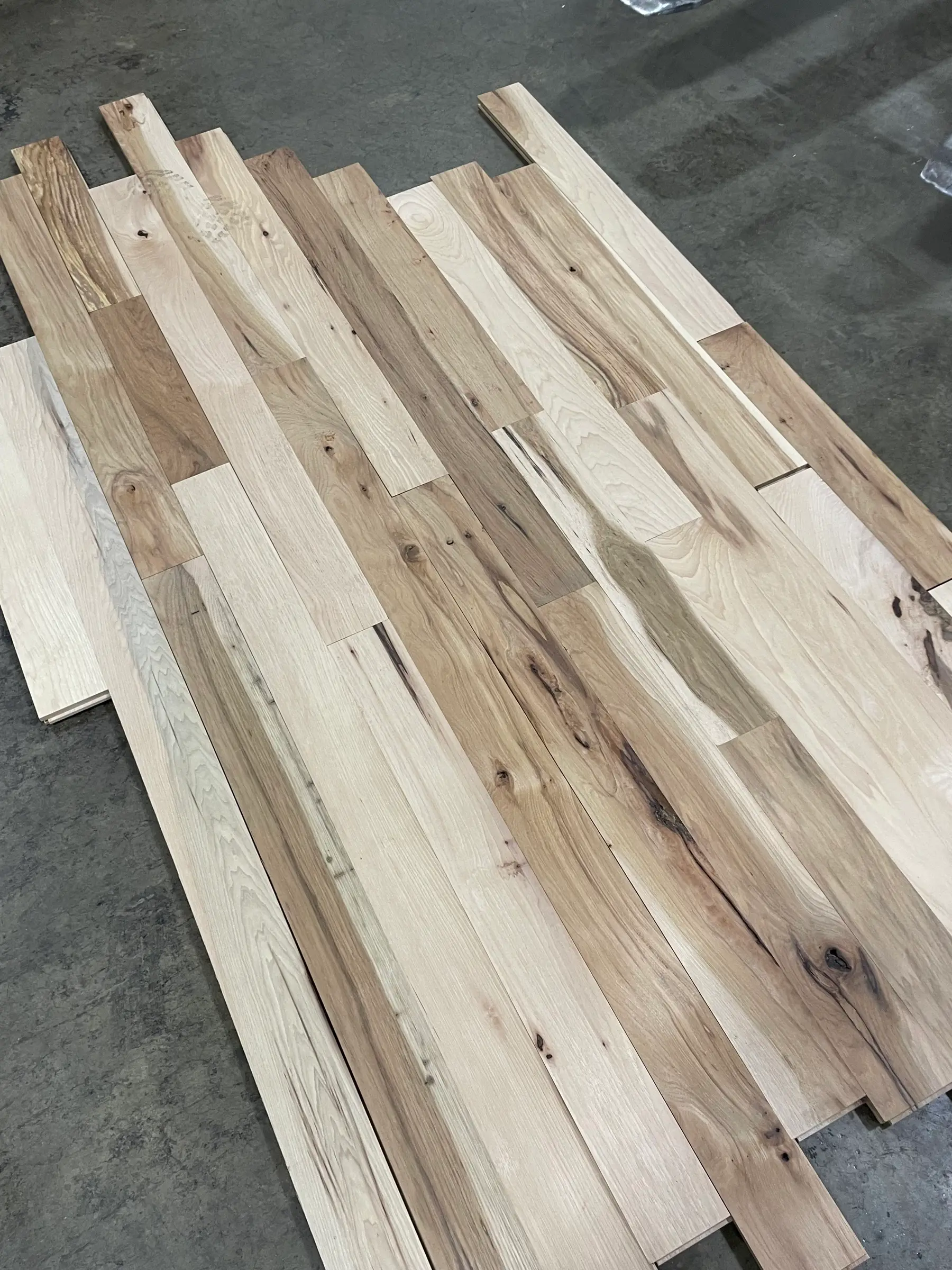
Two floors can be the same species and width and still not match. Look at the grain. If the old floor shows straight lines and flecks, it's likely quartersawn, and flatsawn boards with big arches will stand out next to it. Look at the character too. An old floor that's clean and even wants the cleanest grade available. One with knots and color variation wants a grade that allows them. Ask your dealer for the grade by name and look at the boards before they go down.
It helps to know when the house was built. Sidler checks the county property records if the owner doesn't know, because flooring from the same era is the best match for grain and color.
What Select, 1 Common and 2 Common allow
Lay It In so Nobody Finds the Seam
A straight line of new boards across a room is the thing everybody notices. Weave the new boards into the old rows instead, cutting back the old boards at staggered points so no two end joints line up. Sidler staggers new joints by at least a foot.
Use full tongue-and-groove connections wherever you can and keep face-nailing to the last boards that can't go in any other way. If the repair is in a doorway or the middle of a room and the match is close but not perfect, Sidler's trick is to borrow boards from a closet or pantry for the visible spot and put the new wood where nobody looks.
Sand and Finish the Whole Room
Even a perfect match usually sits a little proud of an old floor that's been worn and sanded over the years. The way to make new and old the same height and the same color is to sand and finish the whole room together, and sometimes the whole floor of the house. Homeowners don't always want to hear it. It's still the answer.
That's one reason we make our flooring unfinished. Unfinished boards get sanded and finished with the old floor, in place, with the same finish. A prefinished board can't do that.
If Your Floor Is 1-1/2"
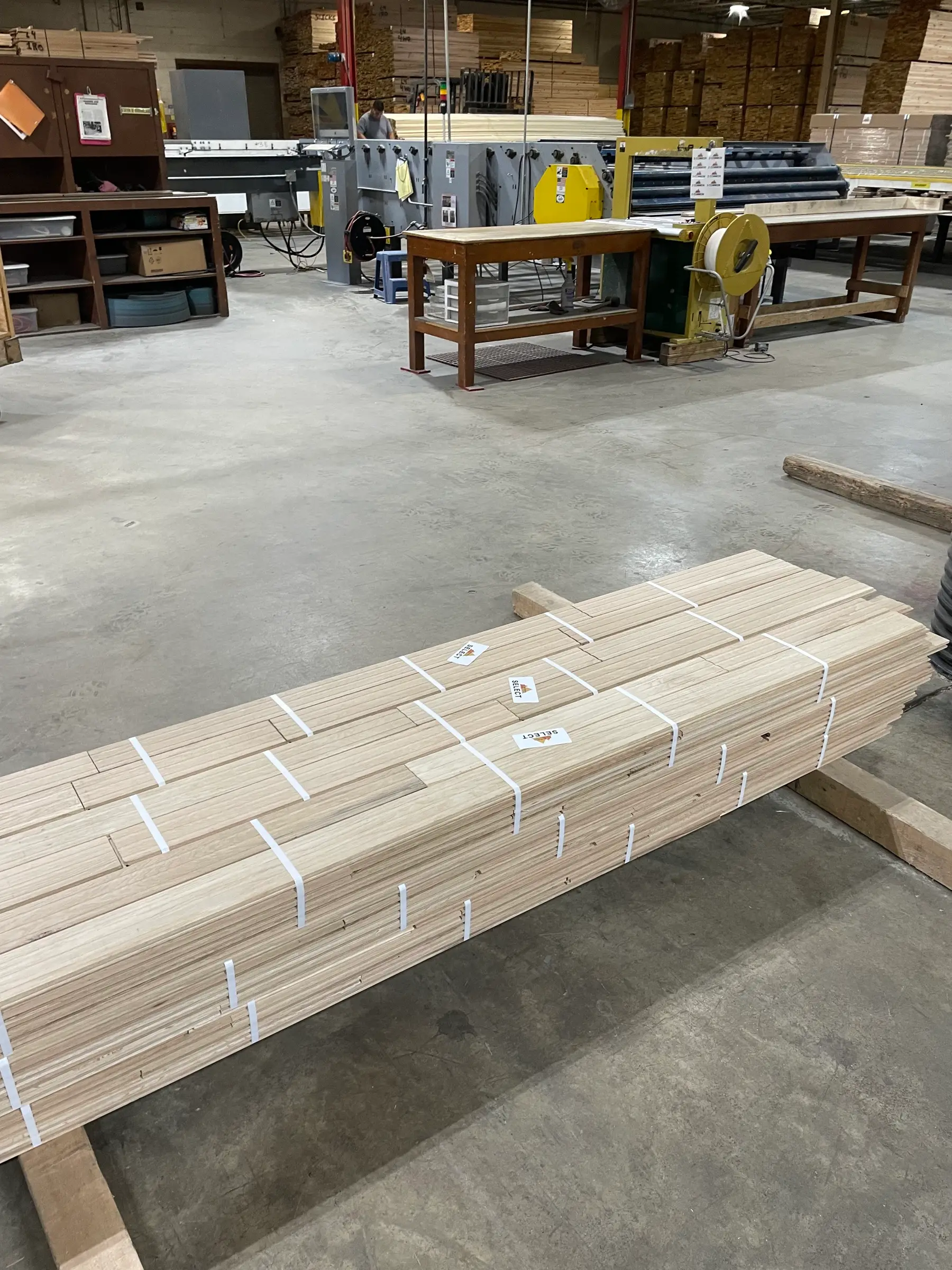
If you measured 1-1/2" across the face, you're who we make Victory Flooring for. It's solid 1-1/2" strip, milled at our plant in Marion from wood grown in Western North Carolina. Call for the species and grades on hand.
We make it in small runs, so call first. Have your measurements from the table above ready and we'll tell you whether we have a run that matches those measurements.
Sources
- Scott Sidler, "Invisible Repairs to Hardwood Floors," Fine Homebuilding: https://www.finehomebuilding.com/2025/03/05/invisible-repairs-to-hardwood-floors
- Real Wood Floors, "Historical Trends in Flooring Widths and Lengths": https://realwoodfloors.com/historical-trends-in-flooring-widths-and-lengths-function-and-design/
- Des Moines Wood Floors, "Board Replacement and Weaving": https://desmoineswoodfloors.com/board-replacement/
- NWFA/NOFMA Unfinished Standard (grade rules): https://nwfa.org/wp-content/uploads/2020/03/NWFA-NOFMA-Unfinished-Standard-Final-April-2018.pdf